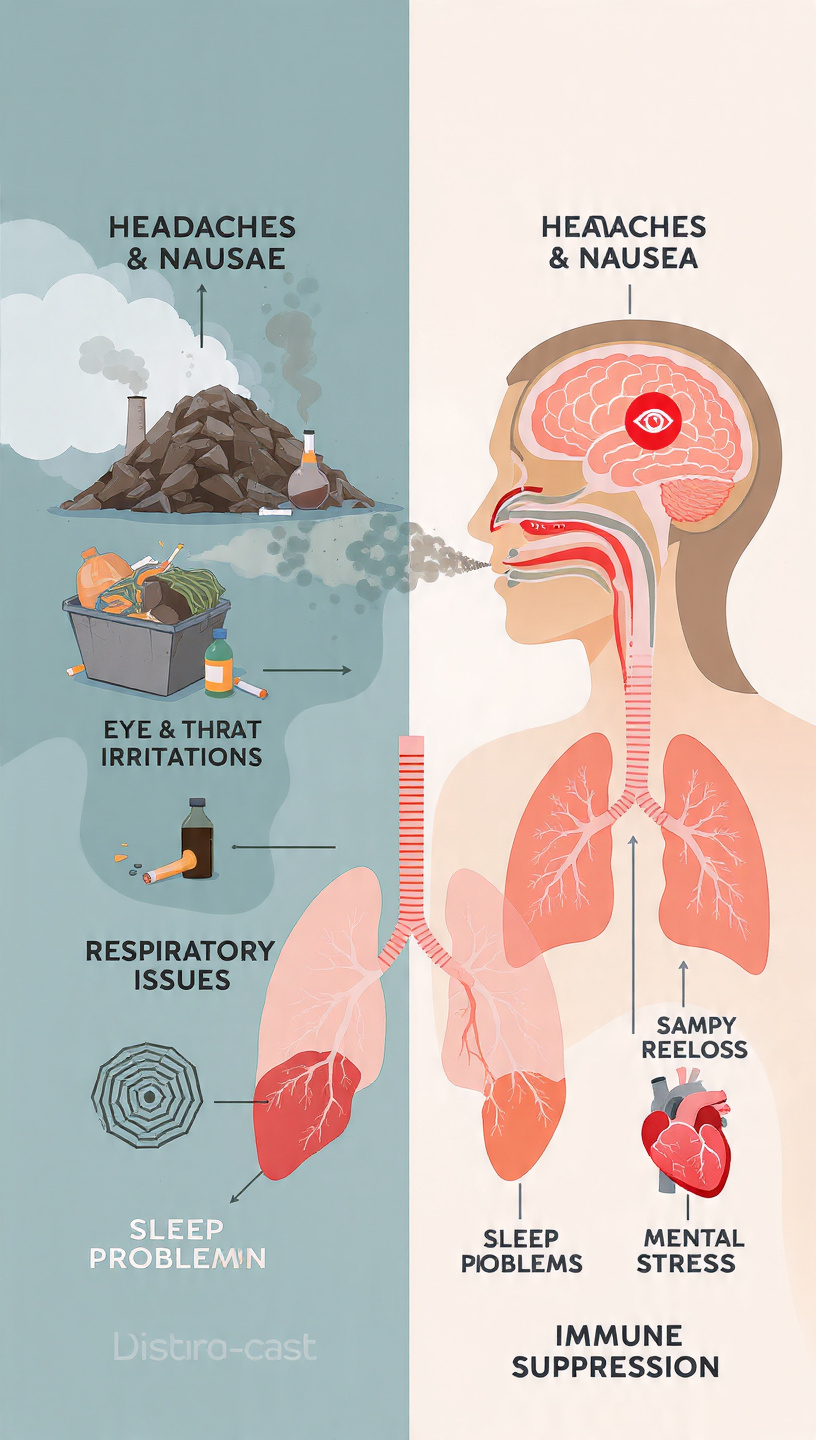
That awful smell from the gutter, dumpsite, or neighbour’s septic tank isn’t just “unpleasant.” It’s odour pollution, and it can quietly damage your health.
1. What is odour pollution?
Odour pollution happens when chemicals, gases, or decaying matter release strong, offensive smells into the air. Common sources: refuse dumps, open sewers, stagnant water, industrial fumes, rotten food, animal waste, poor toilet systems, cigarette smoke, stale alcohol fumes, and urine/ammonia from poorly ventilated toilets or rooms.
2. How cigarette smoke, alcohol fumes & urine smell affect your body
Cigarette smoke contains over 7,000 chemicals including nicotine, tar, carbon monoxide, benzene, and formaldehyde. In the short term, it causes eye burning, sore throat, headaches, coughing, dizziness, and can trigger asthma attacks instantly. Secondhand smoke makes non-smokers nauseous. Long term, repeated exposure leads to COPD, lung cancer, heart disease, and reduced lung function in children. Thirdhand smoke also clings to walls and furniture, releasing toxins for months.

Stale alcohol fumes are made of ethanol vapor, acetaldehyde, and fusel oils. Short-term exposure causes dizziness, headache, eye irritation, poor concentration, and a “hangover” feeling even if you didn’t drink. It also worsens sleep quality. Over time, inhaling acetaldehyde strains the liver, contributes to chronic bronchitis, and increases anxiety. Children exposed to alcohol fumes show slower cognitive development.
Urine/ammonia smell comes from ammonia gas, bacteria, and urea compounds. In the short term, it causes burning in the nose and throat, watery eyes, nausea, and can trigger migraines. Strong spikes cause breathing difficulty. Long-term exposure leads to chronic sinusitis, ammonia burns in the lungs, kidney stress, and constant anxiety or poor sleep due to your body’s stress response.
Why these 3 are worse indoors:
Poor ventilation traps them. Cigarette smoke particles are 0.1–1 micron — they stay airborne 2–5 hours and cling to curtains, sofas, and clothes. Alcohol vapor is heavier than air and pools near the floor where kids play. Ammonia from urine rises fast and irritates lungs at just 25ppm.
3. Who is most at risk?
Children, pregnant women, the elderly, and people with asthma. Living with a smoker, in a room where people drink heavily, or with a toilet that leaks ammonia puts you in the high-risk group. In many Abuja flats, one room serves as bedroom + living room + smoking spot — that’s a pollution trap.
4. The hidden part: You stop noticing it
Your nose adapts in 15–30 minutes — olfactory fatigue. You think the smoke or urine smell is “gone,” but your lungs are still filtering tar, acetaldehyde, and ammonia 24/7.
5. Specific solutions for smoke, alcohol & urine odour
For Cigarette Smoke:
- No-indoor-smoking rule: Smoke travels 7 meters and through doors. Balcony or outside only.
- Air purifier with HEPA + carbon: HEPA traps tar particles, activated carbon absorbs benzene & nicotine smell. Run 2–4hrs after smoking.
- Wash fabrics weekly: Curtains, bed sheets, and sofas hold thirdhand smoke. Use vinegar in wash water.
- Baking soda + charcoal bowls: Leave open bowls to absorb lingering nicotine odour.
- Repaint with odour-sealing primer: If walls are yellow from smoke, normal paint won’t block it.
For Stale Alcohol Fumes:
- Ventilate during/after drinking: Open 2 windows for cross-flow. Alcohol vapor settles — use a low-level fan to push it out.
- Don’t store open bottles: Recork or cover drinks. Empty cups/cans immediately.
- Coffee grounds or lemon peels: Place bowls around room to neutralize acetaldehyde smell overnight.
- Houseplants: Peace lily and spider plant absorb VOCs from alcohol vapor.
- Hydrate the room: Dry air makes fumes feel stronger. A bowl of water raises humidity and reduces irritation.
For Urine/Ammonia Smell:
- Fix the source: Leaking toilet seals, cracked floor tiles, or mattresses soaked with urine keep releasing ammonia. No amount of spray will fix it.
- Enzyme cleaners: Normal Dettol masks smell. Enzyme cleaners break down urea into CO2 + water.
- Vinegar solution: 1:1 white vinegar + water neutralizes ammonia on tiles, buckets, and bathroom walls.
- Exhaust fan: Install a ₦8k–₦15k bathroom extractor. Run it 30 mins after toilet use.
- Activated charcoal bags: Hang in toilets and corners. Replace every 2–3 months.
- Close toilet lid when flushing: Flushing sprays ammonia aerosol 2 meters into the air.
Bottom line: Dumpsite smell is public pollution. Cigarette smoke, alcohol fumes, and urine smell are private pollution — and often more concentrated because you’re trapped with them. If you can smell it, your organs are filtering it
References: BBC