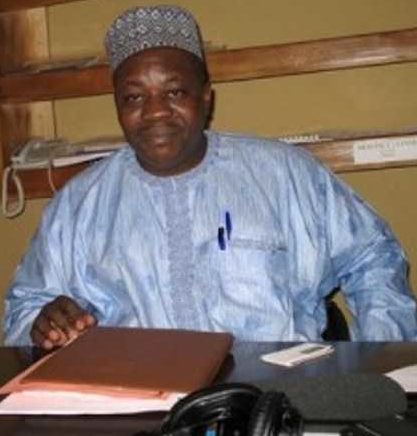
Yesterday, we lost a comrade, mentor, friend and teacher, Dr Ṣẹ́gun Ọṣọbá. He was a patriot and socialist who was deeply committed to Nigeria. He was 92 years old and passed on peacefully at his Ijẹbu-Ode residence yesterday morning. I last met Dr Osoba in 2015 when I attended his 80th birthday celebration in Ijebu Ode in 2015. Dr. Osoba, not the former governor of Ogun State, had his career teaching History at the University of Ife, and devoted his life to training and the motivating generations of progressive students into radical politics. To mark his 80th birthday, the Coalition for a New Nigeria organised a debate on the theme, “The Struggle for a New Nigerian Society: Retrospect and Prospects”. In his controversial book My Watch, General Obasanjo had described Segun Osoba as the late (sic) sincere social critique. Sincere he was, quiet too after his retirement but very much alive at that time until his time came yesterday.
The celebration was an exciting opportunity for reflections on his contributions to building a progressive Nigeria. Trust comrade Osoba to spoil a party. He refused to cut his birthday cake. He explained he had never celebrated his birthday nor cut a cake throughout his life and he will not change at eighty. There is nothing in a birthday he explained, it’s just another day in your life, which will end in death. We cut the cake and ate it anyway, but could not dare sing “Happy Birthday.” Comrade Osoba is best known for the minority report he and Dr. Bala Usman wrote as part of the 49 “wise men” of the Constitution Drafting Committee charged by General Murtala Mohammed to write a new constitution for Nigeria in 1975/76. I recall that as students, we had tried to launch the minority Constitution in Sabon Gari, Zaria but we were tear-gassed and beaten up by the police for supporting the “wrong” draft constitution.
Segun Osoba was a 1959 graduate of the University of Ibadan and obtained a UNESCO fellowship to do his doctorate at the Moscow State University. He taught at Ife from 1967 to 1991 and was one of the first to popularise Marxist methodology thus helping to make Ife one of the first hubs of radical thinking and student unionism in the Nigeria of the 1970s and 1980s. I was a frequent visitor to Ife at that time and greatly benefitted from his mentorship.
As Femi Falana explained at the event, most of his “students”, like him, were not usually registered for his formal courses but were young people bored to death by their own teachers, and who would audit Osoba’s classes and public debates for critical analysis and inspiration. Those of us who benefitted from his mentorship have enormous respect for his knowledge, humility, total devotion to scholarship and above all his contempt for Nigeria’s successive decadent ruling classes.
The decadence of the ruling classes was based essentially on their focus on using power for individual profit thereby setting the process of the development of mega corruption.
The keynote address at the workshop was given by Professor Toye Olorode who reviewed the great difficulties the Nigerian progressive movement has had in creating opportunities to transform Nigeria for the better. The revolutionary path has not worked because of the difficulties of establishing an effective vanguard party to galvanise the struggle and create traction for change. The revolutionaries who decided to take the short court of joining bourgeois politics ended up as turn coats who betrayed our ideals he lamented. Olorode appreciated the fact that Osoba always opposed the short cut path to revolutionary change and devoted his life to improving ideological clarity.
Segun Osoba is respected as a sharp historian and social scientist who carried out profound analysis of changing social structure and classes in Nigeria. Rather than mouth the struggle between the proletariat and the bourgeoisie as reproduced in Marxist theory, he studied the real social structure in Nigerian society and provided context to emergent class forces. He did not mouth Marxism by rote, he understood the methodology and used it to analyse his society. He always inspired his students to believe that intellectual work has a purpose, to improve the lives and livelihoods of the masses. He has a good sense of humour and in his days in Ife often held court in the staff club exposing, castigating and ridiculing Nigeria’s decadent ruling class.
As my good friend Prof Ibrahim Abdallah has argued, we remain blessed as students of Nigerian political economy to have read Osoba’s three key interconnected essays: “Ideological Trends in the Nigerian National Liberation Movement”; “The Nigerian Power Elite, 1952-65”; and “The Deepening Crisis of the Nigerian National Bourgeoisie.” They paint an excellent portrait of how the Nigerian ruling class derailed and failed to follow a pathway that could have lead nationhood, emancipation and development. These three essays appeared in Ibadan; African Social Studies: A Radical Reader; and Review of African Political Economy. They were basic reading in a lot of the courses I taught in Ahmadu Bello University.
In his response to friends and comrades at the Ijebu Ode 80th anniversary event, Dr Segun Osoba drew attention to the legacy of substandard education, corrupt civil service and oppressive security apparatus that the British left for Nigeria. The Nigerian power elite that took over from the British was too focused on primitive accumulation and in fighting, and only worsened the political culture they inherited from the British. It is therefore not surprising that we currently have an excessive level of superstitious belief among Nigerians. One example he gave was that in 2011, many of those who voted for Goodluck Jonathan did so with the superstitious belief that by so doing, Goodluck will spread to Nigerian voters. Today, most Nigerians are shell shocked by the terrible choice they made in 2011, he explained.
For Dr. Osoba, excessive belief in the spiritual is blocking the critical faculties of Nigerians and making the promotion of progressive politics very difficult. Many of the comrades at the meeting are ageing but it was good to see so many friends who have struggled virtually all their lives to create a better Nigeria and leave their country better than they found it. There are fewer such people among the younger generation and in a sense, this is the real challenge of contemporary Nigeria. Too many among the young are focused on the very narrow domain of crass materialism. They lack the idealism and passion that is so important in motivating society for progressive change.
Long live comrade Segun Osoba. I commiserate with his family, community, comrades, students, friends, and colleagues. May his life continue to be a blessing for the Nigeria he loved so passionately.