The Lagos State Government has reaffirmed its commitment to building a more inclusive and resilient social protection system, calling for stronger collaboration among development partners, civil society, academia, Non-Governmental Organisations, and the private sector to safeguard vulnerable residents.
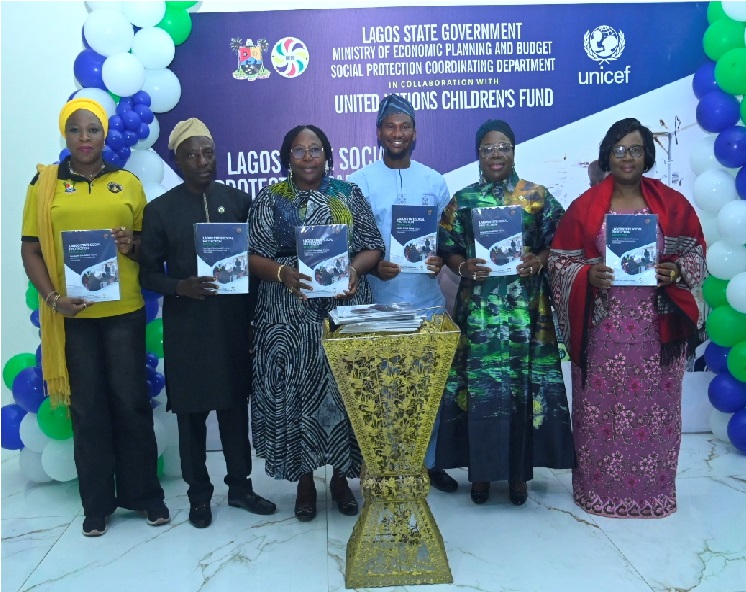
Speaking at the Lagos State Social Protection Partners’ Forum in collaboration with UNICEF, held at Dover Hotel in Ikeja on Wednesday, the Permanent Secretary, Ministry of Economic Planning and Budget, Mrs. Olayinka Ojo, described social protection as “not a privilege, but a right,” stressing that coordinated action is critical to tackling poverty and inequality in the state.
The event also witnessed the launch of the Lagos State Social Protection Report 2025.
The Partners’ Forum is a platform for shared learning and co-creation of strategies aimed at strengthening Lagos State’s social protection ecosystem and to ensure that investments translate into measurable improvements in the lives of residents.
Mrs. Ojo noted that with an estimated population of over 20 million and rapid urbanization, Lagos faces increasing social and economic vulnerabilities that require data-driven, sustainable and inclusive interventions.
She highlighted key milestones achieved by the State, including the development of the Lagos State Social Protection Policy aligned with the National Social Protection Policy, the institutionalisation of a Social Protection Coordinating Department, the implementation of programmes such as Conditional Cash Transfers and Lagos CARES, and the ongoing development of a comprehensive Social Register covering all LGAs and LCDAs.
“With over 20 socio-functional MDAs implementing more than 90 social interventions and over N140 billion in budgetary allocations, there is a clear need for coordinated social protection efforts amongst partners in this regard,” she said.
The Permanent Secretary urged stakeholders to prioritise programme integration, data digitalisation, sustainability in planning and budgeting, and meaningful inclusion of women, youth, persons living with disabilities, the elderly and other vulnerable groups.
Also speaking at the forum, the UN Women Country Representative to Nigeria, Ms. Beatrice Eyong, commended Lagos State government for its leadership in strengthening social protection systems anchored on dignity, equity and inclusion.
Ms. Eyong emphasised the need for gender-responsive social protection systems, noting that women, particularly those in the informal sector remain disproportionately vulnerable to poverty, economic shocks and limited access to social insurance.
“In Nigeria, fewer than one in ten people are covered by at least one form of social protection, and over 70 per cent of working women are in the informal sector. Gender-disaggregated data and inclusive digital access are critical to ensuring no one is left behind,” she stated.
She reaffirmed UN Women’s commitment to supporting federal and state governments in advancing gender-responsive planning and budgeting, as well as policies such as affirmative procurement, which expand economic opportunities for women.
Reaffirming UNICEF’s support towards the effective planning and implementation of Social Protection policy in Lagos and across Nigeria, Mr. Muhammed Okorie, the Organisation’s Social Protection specialist commended Lagos government for her efforts in ensuring that the programme manifested through her grassroots mobilization, partnerships and funding.
He added “Lagos is one of those States that has actually shown that Social Protection goes beyond some particular areas we’ve seen.”
Stanbic IBTC representative, Ademola Abere in a goodwill message said “the initiative is a clear demonstration of responsible governance and a deep commitment of improving the welfare of the most vulnerable members of our society by prioritizing inclusion, dignity and sustainable support.”